


SPLIT SYSTEM AIR CONDITIONER PRICES
Best split system air conditioner prices anywhere in Australia
Melbourne Split systems have the lowest prices on Mitsubishi air conditioners anywhere in Melbourne. Our prices include standard installation in a single story home. An example of our work is below, and price includes wall bracket, electrical, commissioning, removal and disposal of old unit and GST. Call us, make a booking and that’s all you need to do we take care of the rest.

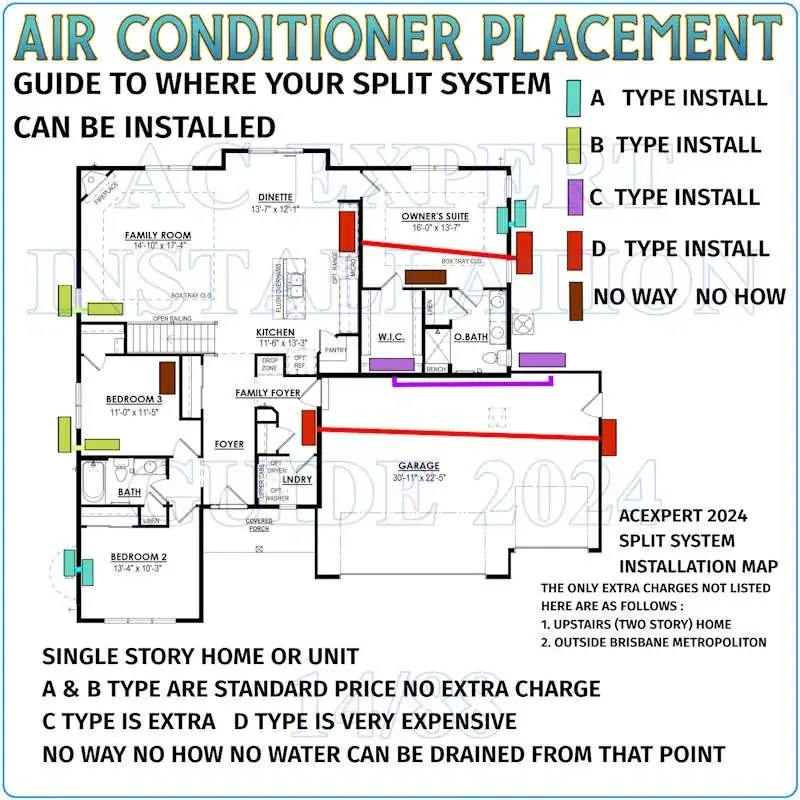
Click the map above to determine what kind of install yours will be. 90% of all jobs are A or B type installs and this is covered completely by our prices opposite.

THE ULTIMATE GUIDE TO SPLIT SYSTEM AIR CONDITIONER PRICES MELBOURNE FOR 2025 /26
Navigating the world of split system air conditioner prices can feel like a daunting task. You see figures ranging from what seems like a bargin to a small fortune, and it’s not always clear what you’re actually paying for. Is a higher price tag always beter? What hidden costs should you anticipate? Understanding the factors that influence the final cost is the key to making a smart, informed purchase that balances your budget with your home’s comfort needs.
This comprehensive guide will demystify split system air conditioner prices, breaking down the costs from the unit itself to the final installation. We’ll explore how brand, capacity, features, and even your location play a crucial role in determining your investment, empowering you to budget effectively and choose the perfect system for your space.
THE BIGGEST COST FACTOR IS KW RATING. VOLUME OF AIR IT CAN COOL.
The single most significant factor affecting the price of a split system is its capacity, measured in kilowatts (kW). This isn’t about the physical size of the unit, but its power to heat or cool a space. Choosing the wrong capacity is a costly mistake – an undersized unit will strain to maintain temperature, while an oversized one will short-cycle, leading to poor humidity control and higher energy bills.
2.0kW – 3.5kW (Small to Medium Systems): Priced approximately between $1,500 and $2,500 (supply only), these systems are ideal for bedrooms, small home offices, or compact living rooms up to 30m². They are the most common and competitively priced units on the market.
5.0kW – 7.1kW (Medium to Large Systems): Ranging from $2,400 to $3,500, these powerful units are designed for large living areas, open-plan spaces, or smaller commercial settings. They provide robust climate control for areas up to 60m².
8.0kW and Above (Large & Commercial Systems): With prices starting from $3,500 and going upwards of $6,000, these high-capacity systems are built for substantial spaces. They often feature more durable components and advanced technology to handle the demands of large zones.


THE BRAND AFFECTS THE COST
Premium Brands (e.g., Mitsubishi Heavy Industries, Daikin, MHI Ciara, Panasonic): You are paying for proven durability, whisper-quiet operation, and often the most advanced filtration and smart features. Expect to pay a premium of 15-30% more than mid-range brands. This investment is often justified by longer warranties and superior energy efficiency.
Mid-Range Brands (e.g., Fujitsu, Hitachi, Samsung): These brands offer an excellent balance of performance, features, and affordability. They incorporate many of the technologies found in premium models but at a more accessible price point, making them a popular choice for most Australian households.
Value Brands (e.g., Midea, Kelvinator): If your budget is the primary concern, value brands provide essential cooling and heating functionality. While they may lack some of the refinements of their premium counterparts and can be slightly louder, they represent the most cost-effective entry point into climate control.
THE HIDDEN COST : INSTALLATION
Many homeowners are surprised to learn that the unit’s price is only part of the story. Professional installation is a non-negotiable cost that can vary dramatically, typically adding $800 to $2,500+ to your total bill. Several factors influence installation cost:
Complexity of the Job: A straightforward install on an external wall on the ground floor will be at the lower end. If the installer needs to run piping through a roof cavity, across a ceiling, or up a second story, the labour and materials cost increases significantly.
Electrical Work: Does your home require a new dedicated circuit or an upgrade to the switchboard? This will add to the cost.
Location: Installation rates can differ between metropolitan and regional areas due to travel time and competition.
Certification & Compliance: Always use a fully licensed and insured installer. While it might be tempting to go with a cheaper, unlicensed option, this can void your product warranty and poses serious safety risks. A proper installation is an investment in the longevity and efficiency of your system.

SPLIT SYSTEM PRICES
Understanding the cost of a split system air conditioner is the first step toward achieving year-round comfort in your home. Prices can vary significantly based on factors like system capacity (measured in kW), energy efficiency ratings, brand reputation, and the complexity of installation. This guide will provide a clear breakdown of current market prices, from budget-friendly units to premium models with advanced features, helping you establish a realistic budget for your cooling and heating needs. We’ll also explore the key considerations that influence the final price, ensuring you make a well-informed investment.
THE ULTIMATE GUIDE TO SPLIT SYSTEM AIR CONDITIONER PRICES MELBOURNE FOR 2025 /26
Navigating the world of split system air conditioner prices can feel like a daunting task. You see figures ranging from what seems like a bargin to a small fortune, and it’s not always clear what you’re actually paying for. Is a higher price tag always beter? What hidden costs should you anticipate? Understanding the factors that influence the final cost is the key to making a smart, informed purchase that balances your budget with your home’s comfort needs.
This comprehensive guide will demystify split system air conditioner prices, breaking down the costs from the unit itself to the final installation. We’ll explore how brand, capacity, features, and even your location play a crucial role in determining your investment, empowering you to budget effectively and choose the perfect system for your space.
THE BIGGEST COST FACTOR IS KW RATING. VOLUME OF AIR IT CAN COOL.
The single most significant factor affecting the price of a split system is its capacity, measured in kilowatts (kW). This isn’t about the physical size of the unit, but its power to heat or cool a space. Choosing the wrong capacity is a costly mistake – an undersized unit will strain to maintain temperature, while an oversized one will short-cycle, leading to poor humidity control and higher energy bills.
2.0kW – 3.5kW (Small to Medium Systems): Priced approximately between $1,500 and $2,500 (supply only), these systems are ideal for bedrooms, small home offices, or compact living rooms up to 30m². They are the most common and competitively priced units on the market.
5.0kW – 7.1kW (Medium to Large Systems): Ranging from $2,400 to $3,500, these powerful units are designed for large living areas, open-plan spaces, or smaller commercial settings. They provide robust climate control for areas up to 60m².
8.0kW and Above (Large & Commercial Systems): With prices starting from $3,500 and going upwards of $6,000, these high-capacity systems are built for substantial spaces. They often feature more durable components and advanced technology to handle the demands of large zones.
THE BRAND AFFECTS THE COST
Premium Brands (e.g., Mitsubishi Heavy Industries, Daikin, MHI Ciara, Panasonic): You are paying for proven durability, whisper-quiet operation, and often the most advanced filtration and smart features. Expect to pay a premium of 15-30% more than mid-range brands. This investment is often justified by longer warranties and superior energy efficiency.
Mid-Range Brands (e.g., Fujitsu, Hitachi, Samsung): These brands offer an excellent balance of performance, features, and affordability. They incorporate many of the technologies found in premium models but at a more accessible price point, making them a popular choice for most Australian households.
Value Brands (e.g., Midea, Kelvinator): If your budget is the primary concern, value brands provide essential cooling and heating functionality. While they may lack some of the refinements of their premium counterparts and can be slightly louder, they represent the most cost-effective entry point into climate control.
THE HIDDEN COST : INSTALLATION
Many homeowners are surprised to learn that the unit’s price is only part of the story. Professional installation is a non-negotiable cost that can vary dramatically, typically adding $800 to $2,500+ to your total bill. Several factors influence installation cost:
Complexity of the Job: A straightforward install on an external wall on the ground floor will be at the lower end. If the installer needs to run piping through a roof cavity, across a ceiling, or up a second story, the labour and materials cost increases significantly.
Electrical Work: Does your home require a new dedicated circuit or an upgrade to the switchboard? This will add to the cost.
Location: Installation rates can differ between metropolitan and regional areas due to travel time and competition.
Certification & Compliance: Always use a fully licensed and insured installer. While it might be tempting to go with a cheaper, unlicensed option, this can void your product warranty and poses serious safety risks. A proper installation is an investment in the longevity and efficiency of your system.