



What’s the total of your Air Conditioner running costs?
SPLIT SYSTEM RUNNING COSTS
This table will tell you all the major split system air conditioning brands running cost per hour / day / month – with dead accuracy because you insert your own electricity price.
SPLIT SYSTEM A/C RUNNING COST CALCULATOR

Almost as important as the up front costs (some would say more) are the ongoing costs to keep your new energy efficient air conditioner running. There’s some easy methods to determine how yours will compare to others. The first is to check out the little sticker on the side. The more stars, the lower the cost will be for you. Examples of these are to your right.
There’s a new system due for implementation combines both of these ratings into one, but that’s the only difference. You can still get a good idea how efficient it will be from as simple star rating.
The stars won’t tell you an exact figure, but you’ll know where your model stands in relation to others. As of publcation, the highest energy rating achieved by an Australian model is 7 stars. And you don’t need to be told what brand that was.
THIS TABLE LISTS 250 DIFFERENT MODELS
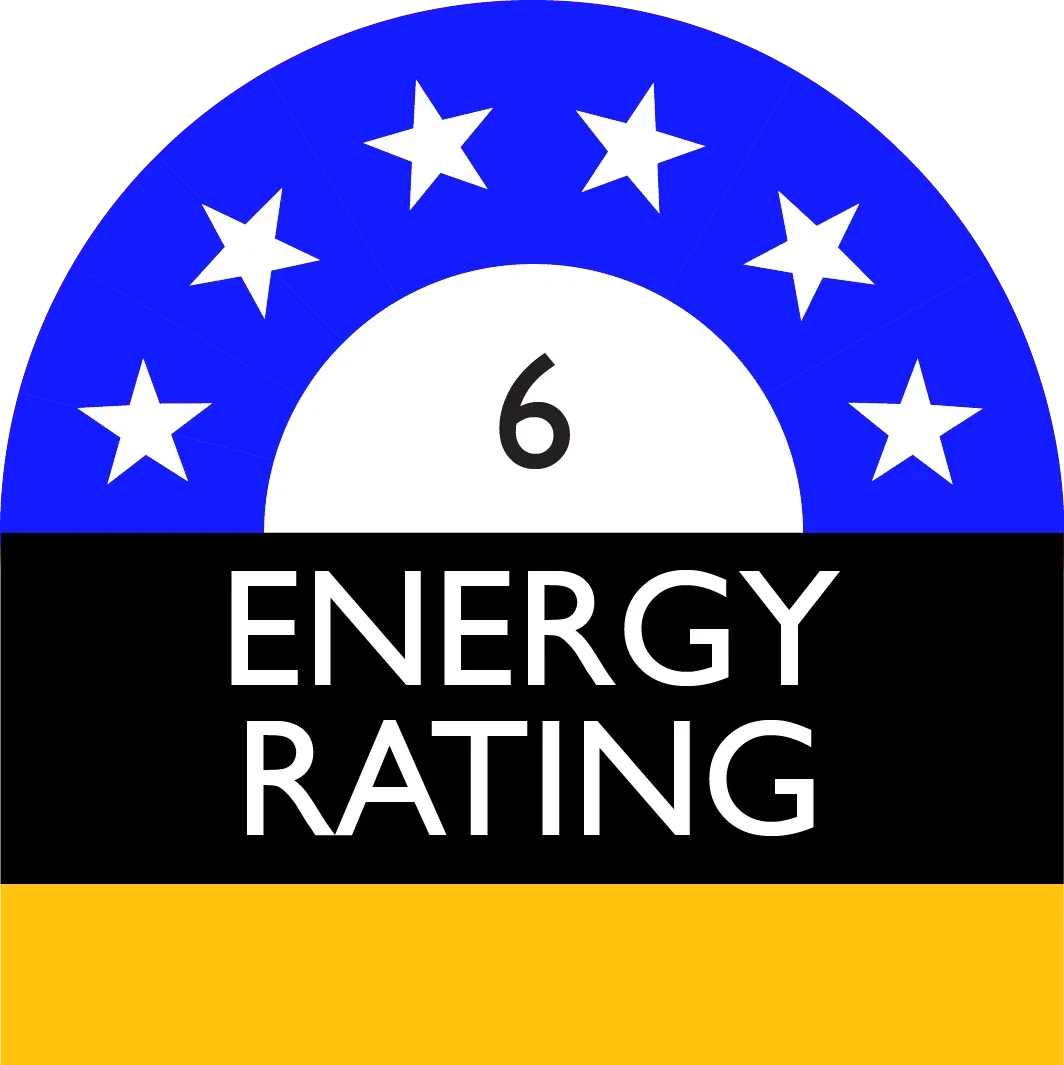
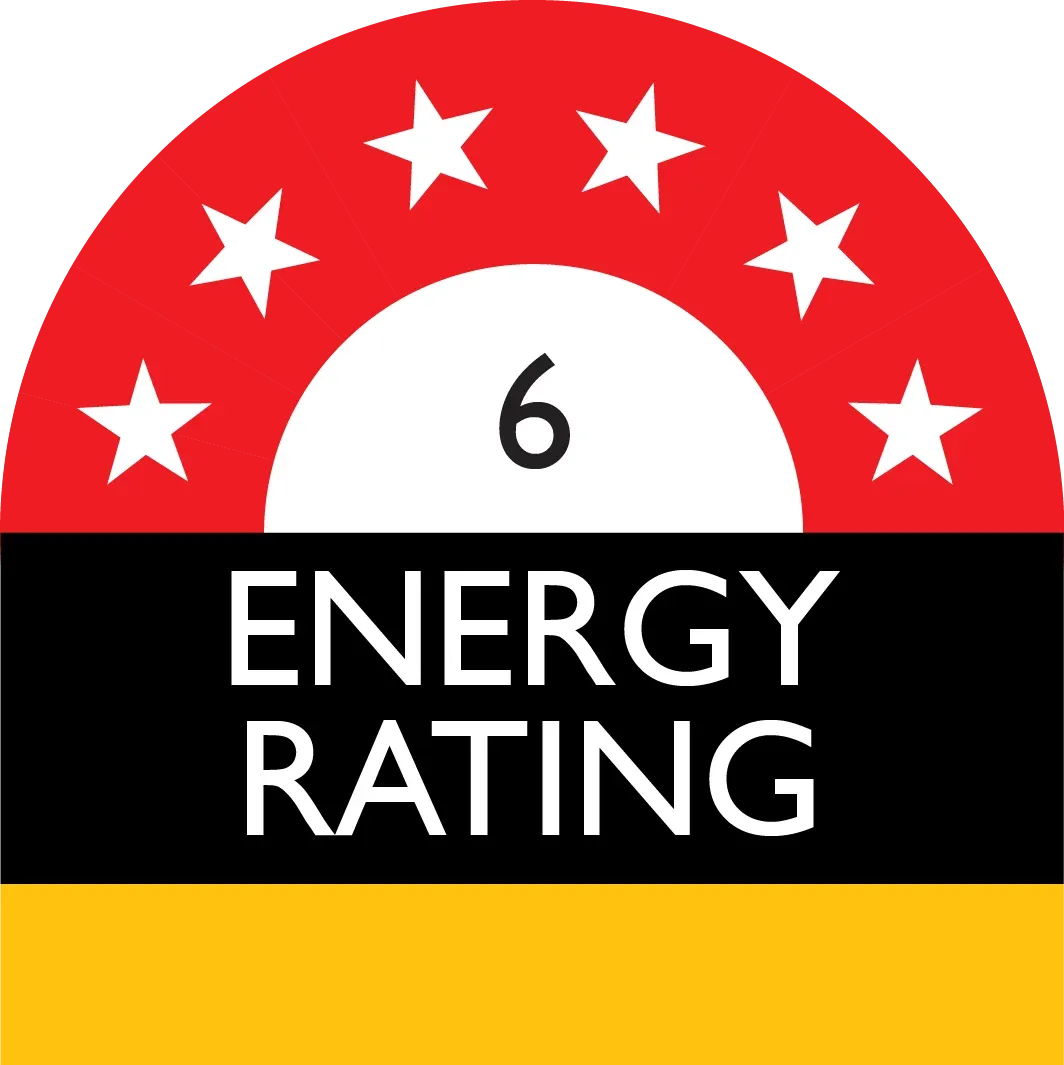
Table below based on 8 hours per day use. Figures are accurate based on all manufacturing specs being accurate.
| Brand | K/W | ¢/kWh | Hrs | $/Hr | $/Day |
|---|---|---|---|---|---|
| Samsung | 3.45 | 0.198 | 2.37 | ||
| Samsung | 5.14 | 0.302 | 3.63 | ||
| Carrier | 2.0 | 0.107 | 1.29 | ||
| Carrier | 2.5 | 0.133 | 1.59 | ||
| Carrier | 3.5 | 0.198 | 2.37 | ||
| Carrier | 5.0 | 0.340 | 4.08 | ||
| Carrier | 6.0 | 0.443 | 5.31 | ||
| Carrier | 7.0 | 0.500 | 6.00 | ||
| Carrier | 7.75 | 0.575 | 6.90 | ||
| Toshiba | 2.5 | 0.434 | 5.21 | ||
| Toshiba | 3.6 | 0.506 | 6.07 | ||
| Toshiba | 5.0 | 0.853 | 10.23 | ||
| Toshiba | 7.1 | 0.935 | 11.22 | ||
| Midea | 2.5 | 0.522 | 6.27 | ||
| Midea | 3.5 | 0.578 | 6.93 | ||
| Midea | 5.0 | 0.853 | 10.23 | ||
| Midea | 7.1 | 0.963 | 11.55 | ||
| Midea | 9.5 | 1.073 | 12.87 | ||
| Panasonic | 2.5 | 0.142 | 1.71 | ||
| Panasonic | 3.5 | 0.200 | 2.40 | ||
| Panasonic | 4.2 | 0.295 | 3.54 | ||
| Panasonic | 5.0 | 0.378 | 4.53 | ||
| Panasonic | 6.5 | 0.463 | 5.55 | ||
| Panasonic | 7.1 | 0.515 | 6.18 | ||
| Panasonic | 8.0 | 0.610 | 7.32 | ||
| Fujitsu | 2.5 | 0.133 | 1.59 | ||
| Fujitsu | 3.5 | 0.223 | 2.67 | ||
| Fujitsu | 5.0 | 0.290 | 3.48 | ||
| Fujitsu | 6.0 | 0.395 | 4.74 | ||
| Fujitsu | 7.1 | 0.520 | 6.24 | ||
| Fujitsu | 8.5 | 0.615 | 7.38 | ||
| Fujitsu | 9.4 | 0.695 | 8.34 | ||
| Mitsubishi | 2.0 | 0.143 | 1.72 | ||
| Mitsubishi | 2.5 | 0.226 | 2.71 | ||
| Mitsubishi | 3.5 | 0.291 | 3.50 | ||
| Mitsubishi | 4.2 | 0.325 | 3.89 | ||
| Mitsubishi | 5.0 | 0.345 | 4.14 | ||
| Mitsubishi | 6.0 | 0.391 | 4.69 | ||
| Mitsubishi | 7.1 | 0.484 | 5.81 | ||
| Mitsubishi | 8.0 | 0.594 | 7.13 | ||
| Daikin Lite | 2.0 | 0.128 | 1.53 | ||
| Daikin Lite | 2.5 | 0.133 | 1.59 | ||
| Daikin Lite | 3.5 | 0.228 | 2.73 | ||
| Daikin Lite | 4.6 | 0.320 | 3.84 | ||
| Daikin Lite | 5.1 | 0.360 | 4.32 | ||
| Daikin Lite | 6.0 | 0.427 | 5.13 | ||
| Daikin Lite | 7.1 | 0.535 | 6.42 | ||
| Daikin Cora | 2.0 | 0.100 | 1.20 | ||
| Daikin Cora | 2.5 | 0.122 | 1.47 | ||
| Daikin Cora | 3.5 | 0.203 | 2.43 | ||
| Daikin Cora | 4.6 | 0.300 | 3.60 | ||
| Daikin Cora | 5.0 | 0.285 | 3.42 | ||
| Daikin Cora | 6.0 | 0.380 | 4.56 | ||
| Daikin Cora | 7.1 | 0.482 | 5.79 | ||
| Daikin Alira | 2.2 | 0.105 | 1.26 | ||
| Daikin Alira | 2.5 | 0.117 | 1.41 | ||
| Daikin Alira | 3.5 | 0.200 | 2.40 | ||
| Daikin Alira | 4.6 | 0.292 | 3.51 | ||
| Daikin Alira | 5.0 | 0.282 | 3.39 | ||
| Daikin Alira | 6.0 | 0.370 | 4.44 | ||
| Daikin Alira | 7.1 | 0.500 | 6.00 | ||
| Avanti | 2.0 | 0.102 | 1.23 | ||
| Avanti | 2.5 | 0.150 | 1.80 | ||
| Avanti | 3.5 | 0.323 | 3.87 | ||
| Avanti | 5.0 | 0.347 | 4.17 | ||
| BRONTE | 6.3 | 0.368 | 4.42 | ||
| BRONTE | 7.1 | 0.473 | 5.68 | ||
| BRONTE | 8.0 | 0.517 | 6.20 | ||
| BRONTE | 9.5 | 0.594 | 7.13 |
The table below took nearly a week to put together. By the time I scraped all the figures off product data sheets, put them into an excel, which then used the formula : Daily Cost = (Cooling Capacity in BTU / EER) * (1 kW / 1000 W) * Hours * ($ per kWh) … To give us accurate and verifiable figures.. I hate this thing. And you will too one day, but not as much as me. The button to your right downloads an excel spreadsheet version.
Now its done. It works. It’s accurate. And best of all : it’s free (for you). Get it out of my sight.
| ELECTRICITY PRICE | ACCURATE SPLIT SYSTEM RUNNING COST | |||||||||
|---|---|---|---|---|---|---|---|---|---|---|
| LOGO | BRAND | MODEL | KW | EER | WATTS | CENTS / KW/h | HOURS / DAY | PER HOUR | PER DAY | PER MONTH |
 |
Samsung | AR12AXHQAWKNSA | 3.45 | 4.26 | 790 | 0.093 | 1.12 | 33.66 | ||
| |
Samsung | AR18AXHQAWKNSA | 5.14 | 4.21 | 1210 | 0.093 | 1.12 | 33.66 | ||
 |
CARRIER ALLURE + | 53 HG SERIES | 2.0 | 4.65 | 430 | 0.093 | 1.12 | 33.66 | ||
| |
CARRIER ALLURE + | 53 HG SERIES | 2.5 | 5.0 | 530 | 0.093 | 1.12 | 33.66 | ||
| |
CARRIER ALLURE + | 53 QH SERIES | 3.5 | 4.43 | 790 | 0.093 | 1.12 | 33.66 | ||
| |
CARRIER ALLURE + | 53 QH SERIES | 5.0 | 3.68 | 1360 | 0.093 | 1.12 | 33.66 | ||
| |
CARRIER ALLURE + | 53 QH SERIES | 6.0 | 3.39 | 1770 | 0.093 | 1.12 | 33.66 | ||
| |
CARRIER ALLURE + | 53 QH SERIES | 7.0 | 3.5 | 2000 | 0.093 | 1.12 | 33.66 | ||
| |
CARRIER ALLURE + | 53 QH SERIES | 7.75 | 3.37 | 2300 | 0.093 | 1.12 | 33.66 | ||
 |
Toshiba | RAV-GM301KRTP-A | 2.5 | 4.24 | 1738 | 0.093 | 1.12 | 33.66 | ||
| |
Toshiba | RAV-GM401KRTP-A | 3.6 | 3.71 | 2024 | 0.093 | 1.12 | 33.66 | ||
| |
Toshiba | RAV-GM561KRTP-A | 5.0 | 3.31 | 3410 | 0.093 | 1.12 | 33.66 | ||
| |
Toshiba | RAV-GM801KRTP-A | 7.1 | 3.35 | 3740 | 0.093 | 1.12 | 33.66 | ||
 |
Midea | MFAB26NB | 2.5 | 4.78 | 2090 | 0.093 | 1.12 | 33.66 | ||
| |
Midea | MFAB35NB | 3.5 | 4.28 | 2310 | 0.093 | 1.12 | 33.66 | ||
| |
Midea | MFAB50NB | 5.0 | 4.01 | 3410 | 0.093 | 1.12 | 33.66 | ||
| |
Midea | MFAB70NB | 7.1 | 3.5 | 3850 | 0.093 | 1.12 | 33.66 | ||
| |
Midea | MFAB90HNNA | 9.5 | 3.5 | 4290 | 0.093 | 1.12 | 33.66 | ||
 |
Panasonic | CS-RZ25XKRW | 2.5 | 4.39 | 570 | 0.093 | 1.12 | 33.66 | ||
| |
Panasonic | CS-RZ35XKRW | 3.5 | 4.38 | 800 | 0.093 | 1.12 | 33.66 | ||
| |
Panasonic | CS-RZ42XKRW | 4.2 | 3.56 | 1180 | 0.093 | 1.12 | 33.66 | ||
| |
Panasonic | CS-RZ50XKRW | 5.0 | 3.31 | 1510 | 0.093 | 1.12 | 33.66 | ||
| |
Panasonic | CS-RZ60XKRW | 6.5 | 3.24 | 1850 | 0.093 | 1.12 | 33.66 | ||
| |
Panasonic | CS-RZ71XKRW | 7.1 | 3.45 | 2060 | 0.093 | 1.12 | 33.66 | ||
| |
Panasonic | CS-RZ80XKR | 8.0 | 3.28 | 2440 | 0.093 | 1.12 | 33.66 | ||
 |
Fujitsu | ASTG09KMTC | 2.5 | 4.71 | 530 | 0.093 | 1.12 | 33.66 | ||
| |
Fujitsu | ASTG12KMTC | 3.5 | 3.93 | 890 | 0.093 | 1.12 | 33.66 | ||
| |
Fujitsu | ASTG18KMTC | 5.0 | 4.31 | 1160 | 0.093 | 1.12 | 33.66 | ||
| |
Fujitsu | ASTG22KMTC | 6.0 | 3.8 | 1580 | 0.093 | 1.12 | 33.66 | ||
| |
Fujitsu | ASTG24KMTC | 7.1 | 3.41 | 2080 | 0.093 | 1.12 | 33.66 | ||
| |
Fujitsu | ASTG30KMTC | 8.5 | 3.45 | 2460 | 0.093 | 1.12 | 33.66 | ||
| |
Fujitsu | ASTG34KMTC | 9.4 | 3.38 | 2780 | 0.093 | 1.12 | 33.66 | ||
 |
Mitsubishi Electric | MSZ-AP20VG | 2.0 | 4.35 | 572 | 0.093 | 1.12 | 33.66 | ||
| |
Mitsubishi Electric | MSZ-AP25VG | 2.5 | 5.01 | 902 | 0.093 | 1.12 | 33.66 | ||
| |
Mitsubishi Electric | MSZ-AP35VG | 3.5 | 4.02 | 1166 | 0.093 | 1.12 | 33.66 | ||
| |
Mitsubishi Electric | MSZ-AP42VG | 4.2 | 3.53 | 1298 | 0.093 | 1.12 | 33.66 | ||
| |
Mitsubishi Electric | MSZ-AP50VG | 5.0 | 3.79 | 1380 | 0.093 | 1.12 | 33.66 | ||
| |
Mitsubishi Electric | MSZ-AP60VG | 6.0 | 3.77 | 1562 | 0.093 | 1.12 | 33.66 | ||
| |
Mitsubishi Electric | MSZ-AP71VG | 7.1 | 3.53 | 1936 | 0.093 | 1.12 | 33.66 | ||
| |
Mitsubishi Electric | MSZ-AP80VG | 8.0 | 3.31 | 2376 | 0.093 | 1.12 | 33.66 | ||
 |
DAIKIN LITE | FTFX SERIES | 2.0 | 3.92 | 510 | 0.093 | 1.12 | 33.66 | ||
| |
DAIKIN LITE | FTFX SERIES | 2.5 | 4.72 | 530 | 0.093 | 1.12 | 33.66 | ||
| |
DAIKIN LITE | FTFX SERIES | 3.5 | 3.85 | 910 | 0.093 | 1.12 | 33.66 | ||
| |
DAIKIN LITE | FTFX SERIES | 4.6 | 3.59 | 1280 | 0.093 | 1.12 | 33.66 | ||
| |
DAIKIN LITE | FTFX SERIES | 5.1 | 3.47 | 1440 | 0.093 | 1.12 | 33.66 | ||
| |
DAIKIN LITE | FTFX SERIES | 6.0 | 3.51 | 1710 | 0.093 | 1.12 | 33.66 | ||
| |
DAIKIN LITE | FTFX SERIES | 7.1 | 3.32 | 2140 | 0.093 | 1.12 | 33.66 | ||
| |
DAIKIN CORA | FTX V20 SERIES | 2.0 | 5.0 | 400 | 0.093 | 1.12 | 33.66 | ||
| |
DAIKIN CORA | FTX V20 SERIES | 2.5 | 5.1 | 490 | 0.093 | 1.12 | 33.66 | ||
| |
DAIKIN CORA | FTX V20 SERIES | 3.5 | 4.32 | 810 | 0.093 | 1.12 | 33.66 | ||
| |
DAIKIN CORA | FTX V20 SERIES | 4.6 | 3.83 | 1200 | 0.093 | 1.12 | 33.66 | ||
| |
DAIKIN CORA | FTX V20 SERIES | 5.0 | 4.39 | 1140 | 0.093 | 1.12 | 33.66 | ||
| |
DAIKIN CORA | FTX V20 SERIES | 6.0 | 3.95 | 1520 | 0.093 | 1.12 | 33.66 | ||
| |
DAIKIN CORA | FTX V20 SERIES | 7.1 | 3.68 | 1930 | 0.093 | 1.12 | 33.66 | ||
| |
DAIKIN ALIRA | FTXM SERIES | 2.2 | 5.29 | 420 | 0.093 | 1.12 | 33.66 | ||
| |
DAIKIN ALIRA | FTXM SERIES | 2.5 | 5.38 | 470 | 0.093 | 1.12 | 33.66 | ||
| |
DAIKIN ALIRA | FTXM SERIES | 3.5 | 4.38 | 800 | 0.093 | 1.12 | 33.66 | ||
| |
DAIKIN ALIRA | FTXM SERIES | 4.6 | 3.95 | 1170 | 0.093 | 1.12 | 33.66 | ||
| |
DAIKIN ALIRA | FTXM SERIES | 5.0 | 4.42 | 1130 | 0.093 | 1.12 | 33.66 | ||
| |
DAIKIN ALIRA | FTXM SERIES | 6.0 | 4.05 | 1480 | 0.093 | 1.12 | 33.66 | ||
| |
DAIKIN ALIRA | FTXM SERIES | 7.1 | 3.55 | 2000 | 0.093 | 1.12 | 33.66 | ||
 |
Mhiaa avanti | zsa 2.0 | 2.0 | 5.45 | 410 | 0.093 | 1.12 | 33.66 | ||
| |
Mhiaa avanti | zsa 2.5 | 2.5 | 5.40 | 600 | 0.093 | 1.12 | 33.66 | ||
| |
Mhiaa avanti | zsa 3.5 | 3.5 | 5.25 | 1290 | 0.093 | 1.12 | 33.66 | ||
| |
Mhiaa avanti | zsa 5.0 | 5.0 | 4.20 | 1390 | 0.093 | 1.12 | 33.66 | ||
|
MHIAA (Bronte) | SRK63ZRA-W | 6.3 | 3.99 | 1474 | 0.093 | 1.12 | 33.66 | ||
|
MHIAA (Bronte) | SRK71ZRA-W | 7.1 | 3.96 | 1892 | 0.093 | 1.12 | 33.66 | ||
|
MHIAA (Bronte) | SRK80ZRA-W | 8.0 | 3.6 | 2068 | 0.093 | 1.12 | 33.66 | ||
|
MHIAA (Bronte) | SRK95ZRA-W | 9.5 | 3.71 | 2376 | 0.093 | 1.12 | 33.66 | ||
Sorts them by name, rating, model and mode. (Heating or Cooling) There’s brands I have never heard of, but none rate very highly. The top performers are just what we have come to expect from those brands. Yours will be on here, and your neighbours.
For exact dollar figures on what they will cost top run you’ll have to keep going down further to the next table

SCIENTIFIC PRINCIPALS WHICH DEFINE THE EFFICIENCY OF AIR CONDITIONERS
MR CARRIER THUNK ALL THIS UP BY HIMSELF – AND PUT IT INTO PRACTISE BACK IN 1913
Understanding Split System Running Costs in Melbourne: A Comprehensive Guide
Split system air conditioners are a popular choice for Melbourne homeowners, offering efficient heating and cooling solutions. However, understanding the running costs of these systems is crucial for making informed decisions. This article delves into the factors influencing split system running costs, focusing primarily on heating in Melbourne’s climate. Additionally, we’ll introduce an interactive real-time table to help you calculate the exact running costs of your new system.
Why Split Systems Are Ideal for Melbourne
Melbourne’s climate is characterized by cold winters and hot summers, making split systems an excellent choice for year-round comfort. These systems are energy-efficient, easy to install, and provide precise temperature control. However, their running costs can vary significantly based on several factors, including energy efficiency, usage patterns, and the size of the unit
Key Factors Influencing Split System Running Costs
1. Energy Efficiency (Star Rating)
The star rating of a split system indicates its energy efficiency. Higher star-rated units consume less electricity, reducing running costs. For example, a 5-star system is more efficient than a 3-star system, translating to lower energy bills.
2. Unit Size (Capacity)
The capacity of the split system, measured in kilowatts (kW), must match the size of the room. An undersized unit will work harder, increasing energy consumption, while an oversized unit may cycle on and off frequently, wasting energy.
3. Usage Patterns
How often and how long you use your split system directly impacts running costs. For example, running the system continuously during winter will result in higher energy bills compared to intermittent use.
4. Energy Tariffs
Electricity rates vary depending on your provider and tariff. Off-peak tariffs can significantly reduce running costs if you use your system during these periods.
5. Climate Conditions
Melbourne’s cold winters require more heating, increasing energy consumption. Insulating your home can reduce the workload on your split system, lowering running costs.
Calculating Split System Running Costs
To help you estimate the running costs of your split system, we’ve developed an interactive real-time table. This tool allows you to input your system’s details and usage patterns to calculate exact costs.

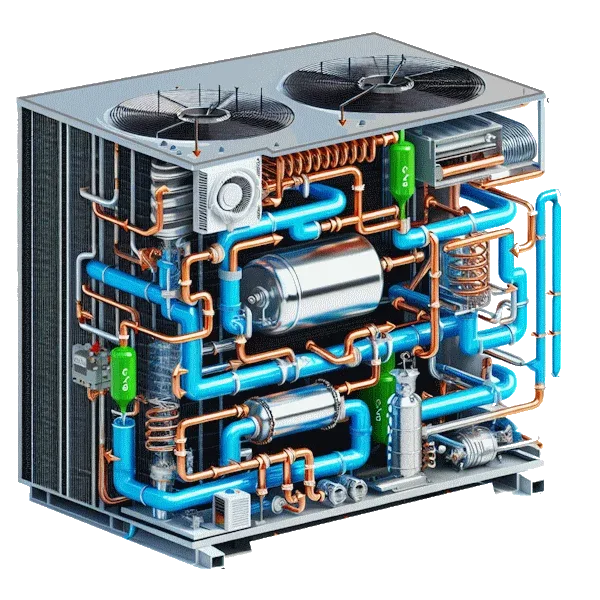
At the core of any split system air conditioner is the refrigeration cycle. This cycle involves a series of transformations where the refrigerant—a special kind of fluid—shifts consistently between liquid and gas states to absorb and release heat. An Air Conditioner running costs calculation is based on this key process. The journey begins in the indoor unit’s evaporator coil, where the refrigerant absorbs heat from the indoor air, cooling it in the process. The warmed refrigerant then travels to the outdoor unit’s condenser coil, releasing the absorbed heat to the exterior. The split system air conditioner running costs in your home depend on this whole sequence of events going off in the right order.
This movement of heat from inside to outside is the essence of air conditioning. It is driven by fundamental thermodynamic principles, ensuring that split system air conditioners operate efficiently, quietly, and reliably…. Usually
COEFFICIENT OF PERFORMANCE : MEASURING EFFICIENCY
The efficiency of this entire process is encapsulated in a metric known as the Coefficient of Performance, or COP. This figure measures the ratio of useful heating or cooling provided to the energy consumed. Put simply, a higher COP means more cooling or heating is achieved per unit of energy consumed, reflecting greater energy efficiency. For most residential split systems, achieving a COP between 1 and 4 is typical, with higher numbers being the goal as engineers strive for more environmentally friendly products that also save on electricity bills.
THERMAL RESISTANCE PUSHES UP YOUR RUNNING COSTS
Thermal resistance, often overlooked, plays a pivotal role in dictating the efficiency of these units. It describes the resistance to heat flow between different materials and interfaces within the air conditioner. This resistance is influenced by three main mechanisms: conduction, convection, and radiation.
– Conduction involves heat flow through direct contact, such as through the metal components of the unit.
– Convection occurs as heat is carried away by moving fluids (like air or water).
– Radiation describes heat transfer through electromagnetic waves, which although less intuitive, is crucial in overall heat dissipation strategies.
Real-world factors like the roughness of coil surfaces, moisture levels, and airflow control can significantly influence these processes. Engineers constantly strive to optimize these variables to enhance the heat transfer efficiency, ensuring the units work effectively over long periods.
Navigating Standards and Regulations
Energy efficiency is not just a technical goal but a regulatory requirement in many parts of the world. Different regions have specific standards that outline the minimum efficiency and performance expectations for split system air conditioners.
– In the United States, the Department of Energy’s Energy Star program sets rigorous standards that these units must meet. This ensures that new units are noticeably more efficient compared to those of previous generations.
– The European Union, through its Ecodesign Directive, mandates stringent efficiency standards and testing protocols, similar to those seen in Japan under its Law for the Promotion of Thermostatic Air Conditioning Systems.
By adhering to these international standards, manufacturers are not only helping consumers save on energy costs but are also playing a critical role in global efforts to reduce environmental impacts. Although Climate change is a great big hoax to impose more wealth redistribution from the middle class to the ultra rich and the ultra poor. You Air Conditioner Running costs will help them just that little bit more.

A/C INCREASED EFFICIENCY
SPLIT SYSTEM AIR CONDITIONER RUNNING COSTS CAN BE REDUCED FURTHER
EFFICIENCY ACROSS VARIOUS INDUSTRIES
Technological advancements have brought about notable improvements in the design of split system air conditioners. These innovations focus on enhancing performance while reducing environmental footprints and that air conditioner running costs.
Variable-speed compressors allow for fine-tuned control over the cooling process, adjusting the compressor speed to the exact cooling load required, which reduces energy consumption and wear over time.
Improved coil designs are another area of innovation. These enhancements increase heat transfer efficiency while minimizing pressure drop, leading to quieter and more efficient systems.
Air-side advancements, such as state-of-the-art fan designs and variable-speed fan units, optimize airflow and further contribute to overall system efficiency.
Furthermore, sophisticated energy-efficient controls have been integrated into these systems. Inverter technologies and automatic temperature regulation systems allow for precise temperature control, adapting to the varying thermal loads throughout the day and significantly cutting down on energy usage.
DEMYSTIFYING THE TECHNICAL TERMS
1. Air-side Refers to the indoor components and operations of the air conditioning system.
2. Coefficient of Performance (COP): A direct measure of the unit’s efficiency, showing how well it converts electricity into cooling.
3. Compression: Involves compressing the refrigerant in the condenser to release absorbed heat.
4. Condenser: The component where heat is expelled to the outside environment.
5. Evaporator: The part of the cycle where heat is absorbed from the indoor atmosphere.
6. Refrigeration Cycle: The repeated process of heat exchange managed by the air conditioning system.
7. Thermal Resistance: The inherent opposition a material offers to heat flow across it.
CORE SCIENTIFIC PRINCIPALS : WERE YOU PAYING ATTENTION?
The core scientific foundations for these systems, notably the conservation of energy and the laws of thermodynamics, dictate the operation and efficiency of air conditioners. These principles underscore how energy is transformed and moved, ensuring that as indoor environments are cooled, energy is neither lost nor unnecessarily consumed.
In essence, modern split system air conditioners leverage a sophisticated interplay of technical innovation, regulatory compliance, and fundamental science. This ensures they not only keep our living spaces comfortable but also do so in an efficient and environmentally considerate manner.


REBATES

SIZING

AC REVIEWS

PRICES

AC SOUND

QUOTE

BUDGET AC
INSTALLS
中國人

DUCTED

EFFICIENCY

CONTACT