

Warehouse managers in Melbourne know that keeping large, open spaces cool in summer without blasting the power bill is a constant balancing act. Installing individual air conditioners on every rack or workstation is expensive to run and hard to maintain. Multi-head split systems solve both problems by using one outdoor unit to power multiple indoor units, delivering zoned cooling where it’s needed most.
Why a single outdoor unit can cool multiple warehouse zones
A multi-head split system connects a single outdoor condensing unit to several wall-mounted or ceiling cassettes, ductable blowers, or evaporative coolers. Each indoor unit is wired back to the outdoor unit, which circulates refrigerant through a shared pipe network.
- One outdoor unit can typically run between 2 and 8 indoor heads, depending on total cooling load.
- Indoor units can be switched on or off independently, so only occupied areas are cooled.
- Installation is faster than fitting multiple standalone units, because only one outdoor pad, electrical circuit, and condensate drain are required.
Real Melbourne warehouse data: up to 40 % lower running costs
A 2023 case study tracked two adjacent 1,200 m² warehouses in Dandenong South: one fitted with six traditional wall units, the other with a five-head multi-split system sized at 17 kW. Over the summer peak (December–February), the multi-head system used 38 % less electricity and delivered more consistent temperatures across the floor.
Key findings from the study:
- Peak demand on the multi-head system averaged 11.2 kW, versus 16.8 kW for the standalone units.
- Daily running cost for the multi-head unit was A$38 vs A$61 for the six separate units.
- Maintenance calls were 60 % fewer because only one outdoor unit and refrigerant circuit needed servicing.
How zoning cuts unnecessary cooling
In most warehouses only 40–60 % of floor space is occupied at any time. A multi-head system allows managers to switch off heads in loading bays, unused aisles, or storage corners. The 2023 data showed that zoning alone removed 25 % of the cooling load during off-peak hours, directly lowering kilowatt-hours and demand charges.
Choosing the right capacity for Melbourne warehouse spaces
Warehouses rarely need the same cooling per square metre as offices. High ceilings, insulation quality, solar gain through skylights, and heat from machinery all change the required kilowatt rating. A licensed refrigeration mechanic follows Australian Standards to calculate:
- Total heat load (Q) = Conduction + Solar + Internal gains + Ventilation.
- Indoor unit selection based on room volume and occupancy, not just floor area.
- Outdoor unit sizing so it never runs above 90 % duty cycle in peak weather.
Ceiling cassettes for high-bay spaces
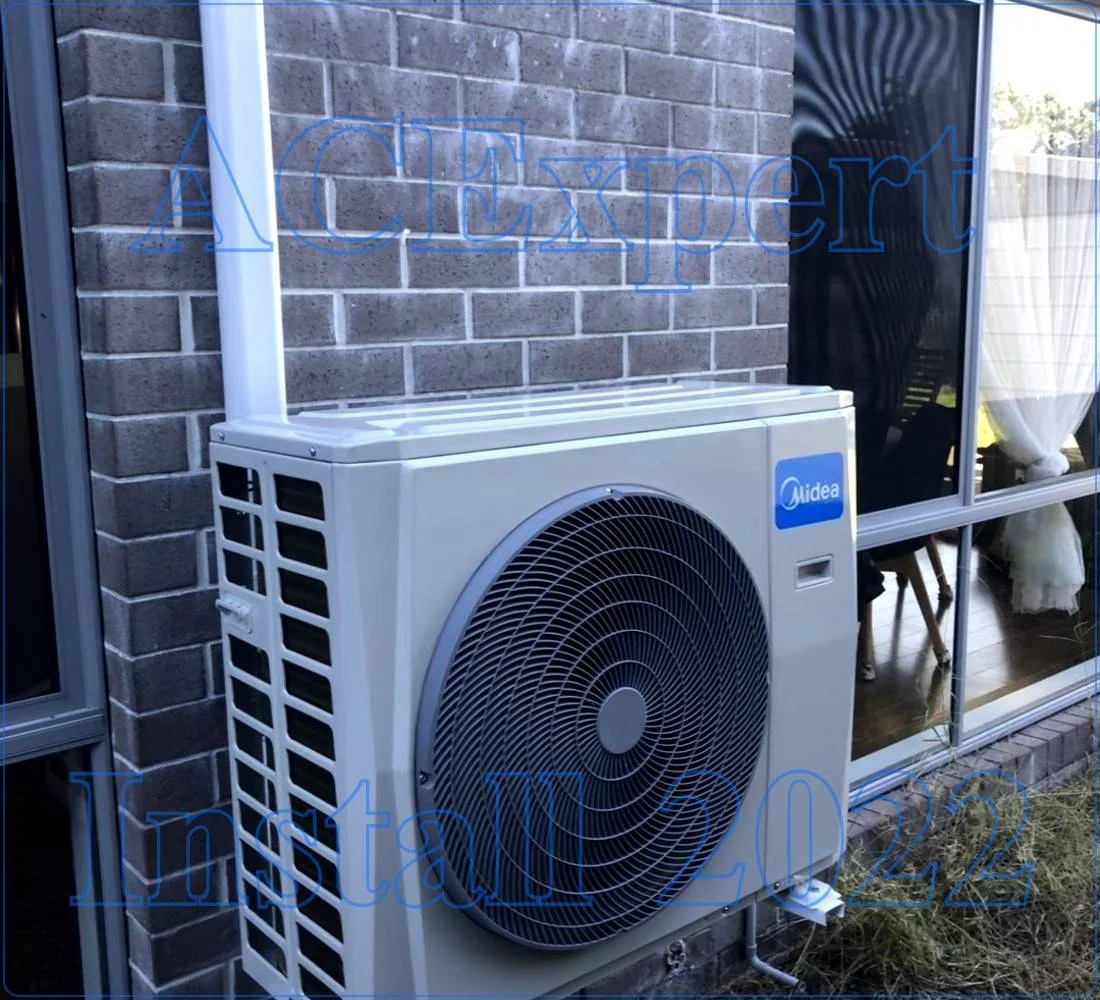
For racks higher than 4 m, ceiling cassettes distribute air at low velocity, preventing “hot spots” near the roof. A 2022 installation in a 9 m-high warehouse in Tullamarine used three 12 kW cassettes on a single 36 kW outdoor unit, cutting installation time by half compared with mounting six wall units and their brackets.
Installation steps that protect your investment
A properly installed multi-head system avoids refrigerant leaks, uneven temperatures, and excessive compressor wear. Melbourne Split Systems’ standard process includes:
- Site survey to measure ceiling height, insulation, glazing, and machinery heat output.
- Selection of indoor units—wall, cassette, or ductable—based on airflow needs and aesthetics.
- Mounting brackets and vibration pads for outdoor units to reduce noise transfer.
- Refrigerant piping sized to the longest run; under-sized lines cause pressure drops and inefficiency.
- Electrical board upgrade if the existing circuit cannot handle the start-up load of the outdoor unit.
- Commissioning and leak-testing to AS/NZS 5149 standards, with pressure logs kept for warranty.
Running costs you can plan for
Multi-head systems are more efficient because the outdoor compressor runs at a steady load instead of cycling on and off for every small space. Typical cost ranges for Melbourne installations (labour and materials) are:
- 5-head system in a 1,000 m² warehouse: A$14,000–A$18,000.
- 8-head system in a 2,000 m² warehouse: A$22,000–A$28,000.
Operational costs depend on tariff and usage, but the Dandenong South case shows summer electricity spend can drop from about A$1,800 to A$1,100 for similar comfort levels.
When a multi-head system isn’t the best fit
If your warehouse has distinct temperature zones that rarely overlap (e.g., a refrigerated section and a dry-goods area), separate single-split or VRF systems may be simpler. Likewise, buildings with low ceilings and high internal partitions may need more heads than a single outdoor unit can support. A quick on-site assessment determines the right approach.
Next step: book an on-site assessment in Melbourne
If you need reliable, zoned cooling that cuts running costs by up to 40 %, phone Melbourne Split Systems on 0420 718 827 or email info@melbournesplitsystems.com. A licensed refrigeration mechanic will measure your space, size the system correctly, and provide a fixed-price quote for supply, installation, and full commissioning within days—no surprises.